Post time: 2026-01-29 15:33:11

News
Here you are:
NEWS
Navigating Current Yeast Price Dynamics
What is the price of yeast recently?
The global price of yeast, an essential ingredient in food, beverage, and bio-industrial applications, reflects a complex equilibrium of interconnected cost factors. Recent pricing shows relative stability but remains elevated compared to historical norms, sustained by pressures across the supply chain. A granular analysis of raw materials, labor, currency, and logistics is key to understanding today's market.
Raw Material Costs: The Sugar Market Anchor
The primary feedstock for commercial yeast production is molasses, a derivative of sugar manufacturing. Thus, yeast pricing is directly influenced by global sugar market dynamics. Although sugar prices have moderated from the peaks witnessed in recent years, they persist at robust levels. Concerns over sugar cane and beet yields in major producing nations like Brazil, India, China, and Thailand—driven by unpredictable weather patterns—maintain a floor under prices. This sustained cost of the core input continues to be the most significant fundamental driver supporting yeast prices, limiting any potential for substantial decreases. Nevertheless, the market price of molasses has decreased recently.
Labor Costs: An Increasing Structural Factor
Labor costs, often an overlooked component, have become a more pronounced factor. This spans the entire chain: from agricultural labor in sugar production to skilled technicians in fermentation facilities and packaging plants. In many key producing regions, wage inflation, regulatory changes, and challenges in retaining skilled workers are pushing operational expenses higher. These increased costs are gradually being integrated into production economics, contributing to a higher baseline cost structure for manufacturers that supports firm overall pricing.
Real-Time Exchange Rates: Shifting Competitive Landscapes
The international trade of yeast means that currency values critically impact landed costs. The strength of the US Dollar (USD) remains a primary focus. A stronger USD makes yeast imports more expensive for countries purchasing with other currencies, effectively raising local market prices. Conversely, producers in regions with weakening currencies may gain a temporary export price advantage, though this is often offset by the increased cost of imported equipment or inputs. Current currency volatility necessitates strategic hedging and can create significant regional price disparities for buyers.
Transportation & Logistics: A New Cost Normal
While global container freight rates have receded from their historic highs, they have settled at levels significantly above pre-pandemic benchmarks. Geopolitical tensions affecting key shipping lanes introduce risks of schedule disruption and potential cost spikes. For yeast, which may require specific shipping conditions, reliability and timeliness are as important as cost. Furthermore, regional trucking and domestic distribution face persistent challenges from fuel price fluctuations. Overall, logistics no longer represent an acute crisis but a permanently elevated component of the delivered cost.
A Case Study: The Best Baker Price Evolution
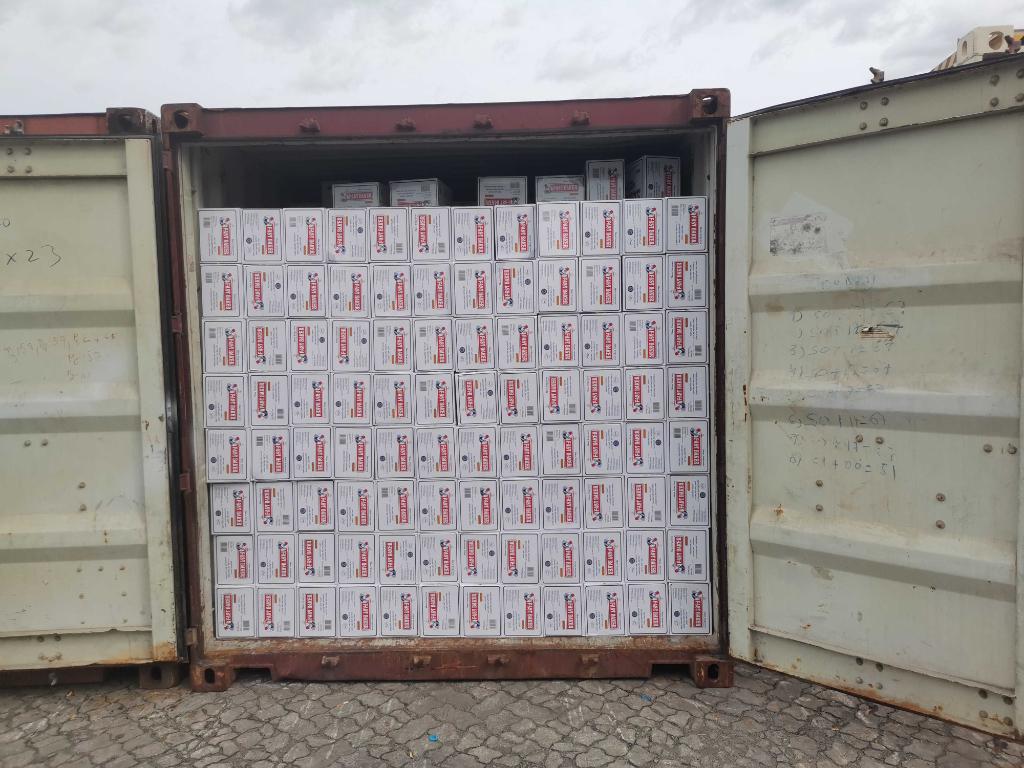
Our own flagship product, Best Baker Instant Dry Yeast, exemplifies this complex pricing environment. Over the past 24 months, its price trajectory has reflected these global headwinds.
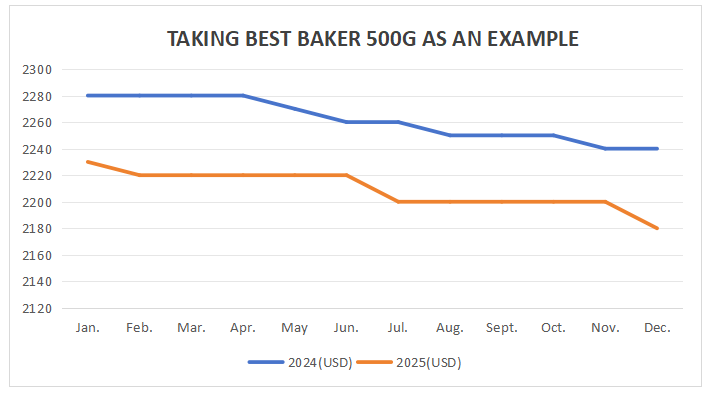
- Early 2024 (Jan.–Apr. 2024)Prices remained relatively stable, fluctuating slightly around the $2,280 mark. This stability was underpinned by long-term supply contracts for molasses and steady market demand.
- Late 2024 (May.–Dec. 2024)Prices entered a downward adjustment phase, gradually falling from $2,280 in April to $2,240 in December. This trend is primarily driven by a significant decrease in raw material costs and the activation of peak-period energy contracts.
- 2025 to Present (Jan.–Dec. 2025)Prices have entered a period of cautious stability, but are operating at an overall lower level than the same period in 2024. Through optimized logistics partnerships and strategic inventory hedging against currency fluctuations, we have successfully prevented further steep declines. However, the sustained high cost of inputs still prevents prices from returning to earlier levels.
Market Outlook
The current yeast price environment is characterized by resilience. It is underpinned by firm raw material costs, rising structural expenses like labor, and a logistics landscape that has reset to a higher cost plateau. Exchange rate movements inject short-term variability and regional specificity.
For industry players, proactive supply chain management is essential. This includes monitoring agricultural forecasts for sugar, fostering strategic supplier relationships to manage currency and cost risks, and building flexibility into logistics planning. The consensus suggests that prices are likely to remain range-bound at these elevated levels in the near to medium term, with susceptibility to upside shocks from any major disruption in sugar yields or global trade flows.
Disclaimer: This industry news update is for informational purposes. Actual prices vary by yeast type (e.g., baker’s, brewer’s, autolyzed), grade, contract terms, and regional market conditions. For specific procurement guidance, direct engagement with suppliers is recommended.
At Best Baker, we remain committed to transparency and providing reliable, high-quality yeast despite these market challenges, helping our customers plan effectively for the future. If you are interested in our products, please feel free to contact us.
-
Conclusion:
Hangzhou Focus Corporation will continue providing premium food preservatives, including Sodium Benzoate, Calcium Propionate, Citric Acid, Instant Dry Yeast, and more.
For quotations, samples, or technical documents, feel free to contact us anytime.
You may like these
LATEST ARTICLES