What Is Sodium Alginate? | Hz-Focus
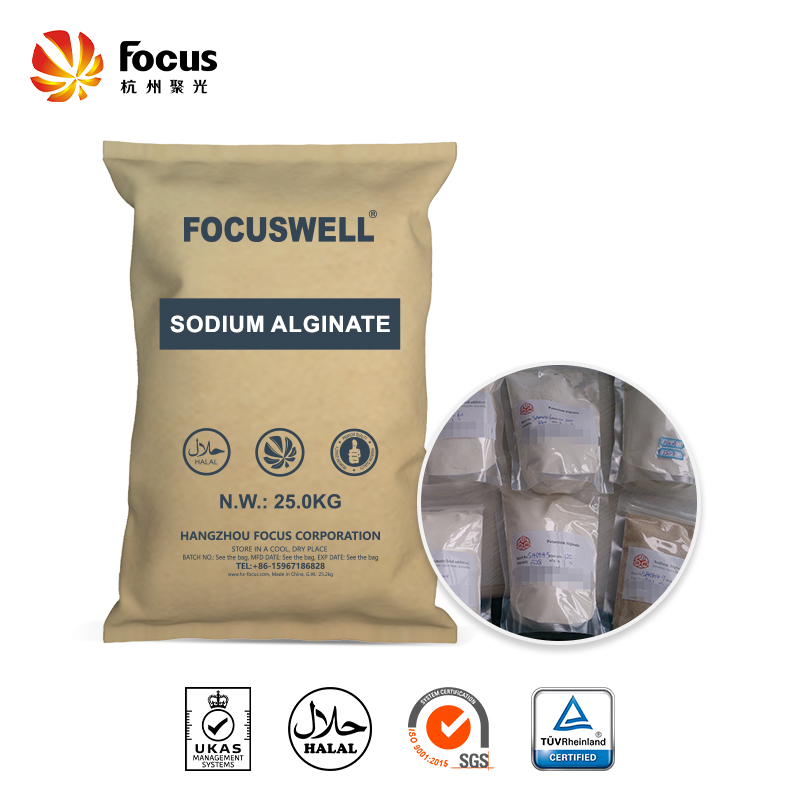
Sodium alginate is a hydrophilic gelatinous substance that can be dissolved in hot or cold water, forming a viscous colloidal solution. It is a highly hydrating and hydrophilic gelling agent with low calorific value, non-toxicity, high expansibility, and flexibility. It exhibits good thickening, stability, gelling, foam stability, anti-aging, and coagulation-promoting properties.

When added to various types of noodles, it significantly increases the viscosity and prevents brittleness, resulting in products with strong elasticity, good texture, and a chewy bite. The recommended usage is 0.2% to 0.5%.
1.In ice cream, it helps maintain the shape and texture of the product, resulting in a smooth and delicate texture. The recommended usage is 0.1% to 0.5%.
2.In bread and cakes, it increases the expansion rate, resulting in products that are soft, elastic, and fluffy. The recommended usage is 0.1% to 1%.
3.In dairy products and beverages, it improves the mouthfeel and the coagulation of yogurt. The recommended usage is 0.25% to 2%.
4.It is also used in candies, frozen foods, and food fillings to improve the texture and provide good gelling properties.
Furthermore, sodium alginate is a dietary fiber that can lower cholesterol levels in the blood and liver, inhibit the increase of total cholesterol and fatty acid concentrations, and prevent the absorption of harmful elements such as strontium and cadmium ions. Therefore, it is beneficial for the treatment of hypertension, coronary heart disease, and diabetes. Additionally, it can be used as a textile sizing agent, thickening agent in cosmetics, and a preservative for fruits.
Other related:
2.What is Bread Improver? Enhancing the Art of Bread Making
3.What Can You Make with Yeast besides Bread | Hz-Focus
4.Is Dry Yeast Good for Health? - Hz-Focus
5.Bread Improver Substitutes | What Methods Can I Use